
Overview
Preventus is a healthcare technology company focused on managing chronic conditions through AI-driven insights and automated health data collection. By leveraging proprietary AI and deep learning, Preventus streamlines the process from initial screening to treatment and ongoing management, providing scalable and efficient healthcare solutions, particularly for underserved and rural communities.
Project Description
Summary:
Chronic conditions or non-communicable diseases (NCDs) such as cardiovascular disease, stroke, diabetes mellitus, cancers, respiratory diseases, and tooth & gum concerns cannot be ‘cured’, rather they must be ‘managed’ for life. At Preventus, we believe that with technology, we can lead healthcare through prevention strategies and AI-driven insights, automating the monitoring and management of NCDs.
Goals:
-
Streamline the automation of health data from on the ground to the clinician's surgery room.
-
Provide real-time health data to health professionals as needed, driven by AI.
-
Scale the solution to all regions, especially where health professionals are scarce.
-
Support NGOs with fintech solutions to track procedures and payments.
-
Connect rural communities with health professionals in big cities.
Problem Statement
Context:
Developing an efficient system to manage NCDs requires integrating technology to automate data collection, provide instant AI-generated reports, and streamline the patient journey.
Objectives:
-
Develop an iPad application for doctors, hospitals, and clinics.
-
Create a mobile application for patients and healthcare personnel.
-
Design over 100 customizable templates for data collection.
-
Utilize AI to generate health reports in minutes.
-
Ensure the system handles multiple medical categories seamlessly.
Challenges
-
Domain Awareness: Understanding medical terminology and processes through extensive research.
-
System Design: Creating a system capable of managing numerous templates and expediting patient journeys.
-
Efficiency: Transitioning from traditional forms to a quick, automated digital process.
-
Three-Phase Design: Designing interfaces for admin, application/system, and patient use.
-
Market Innovation: Developing a brand identity and product from scratch, with no similar products available.

Balancing Privacy and Insight: A Detailed Look at One Template and a Glimpse of 100+
Due to company privacy and policy restrictions, it is challenging to present detailed research for all 100+ templates. However, I will showcase one template case study and its research. Additionally, I will provide a glimpse of all 100+ templates below.
Process
The design process for Preventus, includes identifying key issues, conducting domain research, and developing over 100+ customizable health templates. We started with low-fidelity wireframes, progressing to high-fidelity designs and interactive prototypes. Usability testing with medical professionals provided valuable feedback, leading to iterative refinements. Accessibility and compliance were prioritized throughout. Although privacy policies restrict sharing detailed research for all templates, a glimpse of the comprehensive template library is provided.
Research & Data Collection
I am showcasing a case study on the Teeth Alignment and Medical History template, which includes insights from field visits and user experiences. Additionally, a glimpse of all 100+ templates is provided to offer an overview of the comprehensive work conducted in this project. This approach ensures privacy while highlighting the depth and breadth of my research efforts.

Primary Research: Conducted field research at Toothsi clinic, including patient journey analysis and interviews with healthcare professionals.
Secondary Research: Studied medical documents and client-provided files to understand and transform them into application templates.
Template: Dental template for Teeth Alignment/Smile Makeover/Medical History
-
Field Visit: Visited Toothsi clinic and office, observed the patient journey, and identified pain points.
-
Customer Experience: Documented a real patient's journey, including pre-treatment analysis, 3D scan, and consultation process.
Goal To Achieve
Early Intervention Orthognathic & Orthodontics using Automation, AI & Deep Learning.
Orthodontics: Refers to the alignment of teeth through active pressure.
Orthognathic: Refers to the position of the jaws & its guided correction through plates; bars; or surgery
Early intervention is the timeframe between the eruption of 6 year old molars & 12 year old molars.
The Problem with Late Intervention: The later the intervention the more serious the equipment needed to modify growth of arch/jaw/teeth if at all. For many, surgery is the only option, and if not, leads to the aesthetic & functional compromise for life.

Whiteboard
Whiteboard Work: Exploring and Solving Pain Points
During the design process, We utilized whiteboard sessions to map out and address key pain points. These collaborative efforts helped us identify challenges such as domain awareness, system design complexity, and the need for a seamless user experience. By brainstorming solutions and iterating on ideas, we developed a comprehensive plan to create an effective and user-friendly healthcare application.


Toothsi Journey
In my field research, I visited Toothsi Clinic in Thane, Mumbai, and experienced their patient journey firsthand. From the initial welcome and free analysis to the advanced 3D scanning and personalized treatment plans, I gained valuable insights into their seamless process. This experience, especially focusing on the Teeth Alignment Templates case study, helped shape the user experience design for Preventus.


Experienced the future of dental care with seamless 3D scanning and personalized treatment plans at Toothsi Clinic.
Every great design begins with an even better story.
Toothsi Field Research:
Gaining Insights into Processes and Customer Experience
I experience with Preventus begins with a visit to a Toothsi clinic in Thane, Mumbai, where I discovers how technology and AI-driven insights can streamline my journey from diagnosis to treatment and beyond.


Process of Product Making
Toothsi 3D Aligners and Print:
How Much Time and How To Make?
Teeth 3D Scanner In the clinic, the 3D scan is performed using the Autoclavable Apple dental 3D Scanner - Intra Oral Scanner. This machine scans your teeth and sends the 3D scan data to Toothsi for further processing.
Problem:
The AUTOCLAVABLE APPLEDENTAL 3D SCANNER - INTRA ORAL SCANNER, which is used in clinics to perform detailed 3D scans of teeth, is highly effective but can be prohibitively expensive for many practitioners. The cost of this machine is approximately ₹10,00,000 INR.

Solutions:
-
Mobile-Based Scanning Solutions:
-
3Shape TRIOS® Mobile: Utilizes a mobile device paired with an intraoral scanner to capture 3D images. This system can reduce costs and increase portability.
-
iTero Element Flex: Offers a portable scanning solution that connects to a laptop, providing flexibility and cost-effectiveness.
-
-
AI-Powered Imaging Software:
-
Dental AI Applications: Use AI to convert 2D images or videos taken from a standard smartphone into 3D models. Examples include:
-
SmileMate: Uses AI to analyze photos taken with a smartphone and generate a 3D model of the teeth.
-
OrthoAnalyzer by 3Shape: Converts 2D images into 3D models using advanced algorithms.
-
-
-
Open Source and Affordable Software:
-
Autodesk Meshmixer: Free software that allows for the creation and modification of 3D models from 2D images. It is user-friendly and can be used in conjunction with cheaper scanning devices.
-
Blender: An open-source 3D modeling software that can process 2D images into 3D models with the help of plugins and extensions.
-
-
DIY 3D Scanning Kits:
-
Structure Sensor by Occipital: Attachable to iPads and iPhones, it offers affordable 3D scanning capabilities at a fraction of the cost of professional equipment (around ₹50,000 INR).
-
Intel RealSense: Offers 3D scanning capabilities using a depth camera that can be connected to various devices (around ₹30,000 - ₹40,000 INR).
-
-
Partnerships with Dental Labs:
-
Establishing partnerships with local dental labs that already possess high-end 3D scanning equipment. This allows for scans to be performed at a reduced cost compared to purchasing the equipment outright.
-
-
Subscription-Based Scanning Services:
-
Renting Scanners: Using services that rent out high-end scanning devices on a subscription basis. This reduces upfront costs and allows access to the latest technology.
-
Pay-Per-Scan Models: Services where clinics pay a fee per scan performed, rather than buying the scanner outright.
-

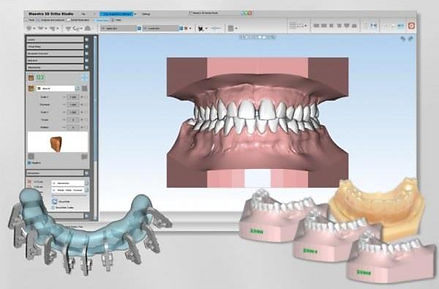
Teeth Segmentation The next process involves sending the 3D scan for 3D segmentation, which is performed by a 3D modeler using software called Shining 3D.
Problem:
Currently, the 3D scan of the teeth is sent for 3D segmentation, which is performed manually by a 3D modeler using software called Shining 3D. This process takes approximately 30-45 minutes, causing delays and reducing efficiency.
Solutions:
Implement automatic 3D segmentation directly in front of the patient using advanced AI algorithms. This approach will significantly reduce the time frame from 30-45 minutes to a few minutes, enhancing the overall patient experience and increasing efficiency in the clinic.
There are several software solutions available that can automatically perform 3D segmentation, which can significantly streamline the process. Here are a few notable options:
-
NVIDIA Clara:
-
Overview: Clara is an AI-powered healthcare application framework that provides tools for automatic 3D segmentation and medical imaging.
-
Features: Deep learning models for automatic segmentation, real-time processing, and scalable infrastructure.
-
-
3D Slicer:
-
Overview: An open-source platform for medical image informatics, image processing, and three-dimensional visualization.
-
Features: Extensible with automatic segmentation modules, supports a wide range of medical image formats, and is widely used in research.
-
-
Simpleware ScanIP:
-
Overview: A comprehensive 3D image processing software for creating models from scan data.
-
Features: Automatic segmentation tools, CAD integration, and finite element model generation.
-
-
ITK-SNAP:
-
Overview: An open-source software application used to segment structures in 3D medical images.
-
Features: Automatic segmentation, manual segmentation tools, and support for multiple image formats.
-
-
ZBrush:
-
Overview: Primarily known for digital sculpting, ZBrush offers tools for 3D segmentation and modeling.
-
Features: Advanced 3D modeling tools, automatic segmentation plugins, and high-resolution modeling capabilities.
-
-
InVesalius:
-
Overview: Open-source software for reconstructing structures of the human body in 3D.
-
Features: Automatic and semi-automatic segmentation, medical imaging support, and export to 3D printing formats.
-

Delivery of 3D Scan Results to Patients

Patient Scan - Yash Mewati


Thank You
🙏
Thanks to Dr. Tushan Bhindi, Founder of Preventus, and Dr. Manjul Jain, Founder of Toothsi,
I would like to express my sincere gratitude for the invaluable opportunity to experience the field journey with Preventus and Toothsi. This firsthand experience has been instrumental in enhancing my understanding of customer experience and refining our treatment plans. Thank you for your guidance and support throughout this enriching journey.
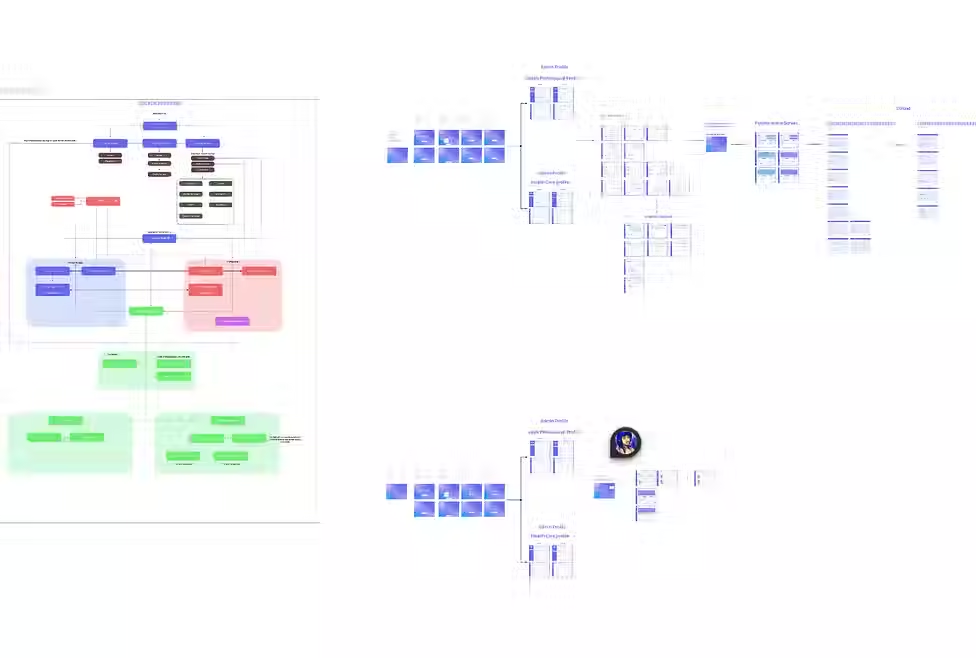
First Iteration



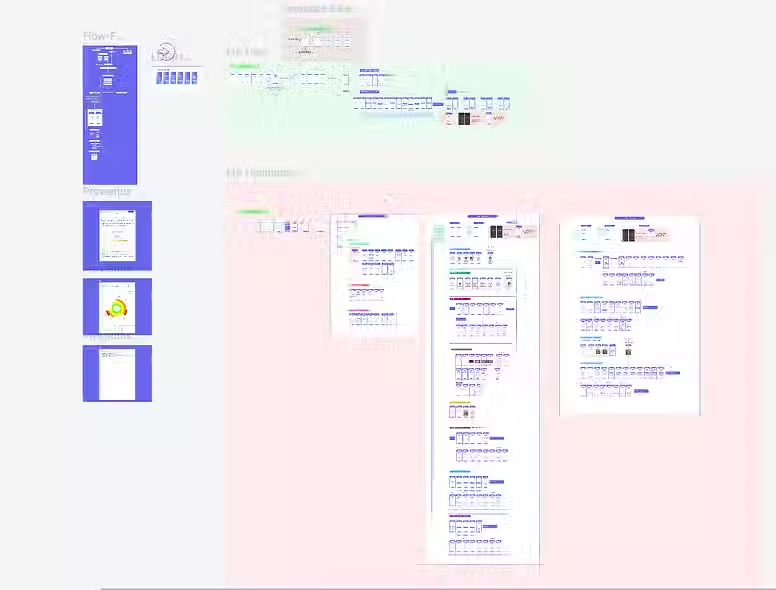
Second Iteration

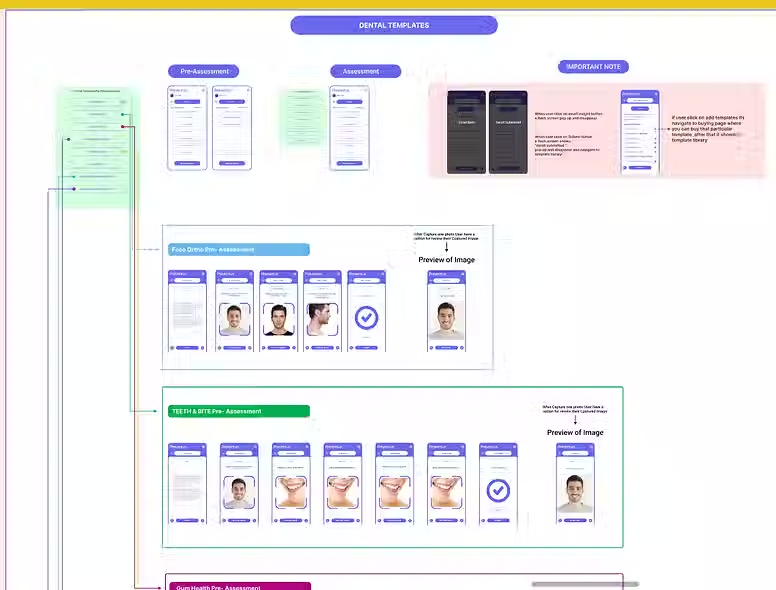

Final Iteration


Project Learning and Documentations
From Concept to Completion: Insights and Records of Our Design Journey
Understanding the Medical Domain:
-
Challenge: Limited initial knowledge of medical terminology and processes.
-
Learning: Extensive research and collaboration with medical professionals significantly increased my domain knowledge, enabling the creation of accurate and relevant designs.
Complexity of Health Data Management:
-
Challenge: Designing a system capable of handling and automating 100+ health templates.
-
Learning: Developing customizable templates and incorporating AI for data analysis and report generation streamlined the process, making it more efficient and user-friendly.
User-Centric Design:
-
Challenge: Ensuring the applications cater to diverse user groups, including doctors, patients, and healthcare providers.
-
Learning: Conducting usability testing and gathering feedback from different stakeholders helped refine the design, ensuring it meets the needs of all users effectively.
Integration of Advanced Technology:
-
Challenge: Incorporating AI, deep learning, and IoT devices into the healthcare system.
-
Learning: Leveraging these technologies improved data accuracy, provided real-time insights, and facilitated better patient care and management.
Field Research Insights:
-
Challenge: Translating field research findings into actionable design improvements.
-
Learning: Observing the customer journey and interactions at Toothsi clinics provided valuable insights that informed the design of intuitive and efficient user interfaces.
Journey To Innovation
Thank you for taking the time to read this case study. Your interest and attention are greatly appreciated. This project has been a journey of learning, collaboration, and innovation, and I hope it has provided valuable insights into my process and outcomes. I look forward to your feedback and am excited about the potential impact of this work in improving healthcare experiences.
